Thursday

Homeschooling From Florence

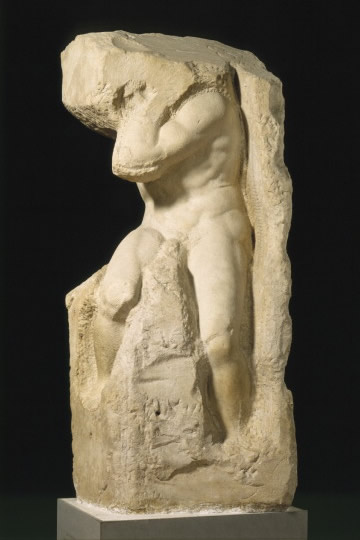
Our daughter’s 7th grade classmates back home are currently studying the Renaissance so it’s fortunate that we’ve been in Florence for a month. While she is missing the day-in and day-out assignments that her classmates are getting, she’s living and breathing the Florence of Michelangelo. de’Medici, Brunelleschi, Savanarola et al., as we walk around and explore the city each day. She’s also reading Irving Stone’s fictionalized biography of Michelangelo “The Agony and the Ecstasy.” I knew she was getting a lot out of the book when she got very excited about seeing Michelangelo’s “Prisoners” at Florence’s Accademia. She breathlessly explained to us how Michelangelo felt he did not create a sculpture; he simply allowed the figure to escape from the stone.

Homeschooling in general is not that difficult; it’s a matter of knowing what the kids should be learning and focusing them on it. As for knowing what to study, most states post their grade-level education standards on their state web sites. For our state, California, I cut and pasted those standards into a long Excel spreadsheet. My wife and I looked through it and decided that we needed to follow the guidelines with respect to Math, Science and History but we would do our own thing for everything else. For Math it was easy; her middle school teacher and principal allowed her to follow with the class and access both the on-line textbook and homework assignments. For History and science it was a little more difficult. This is where I harnessed the power of the World Wide Web to find the materials we needed. First I typed in “7th grade history textbook California” and found many textbook web sites (Holt Rinehart Winston, Prentice Hall, Glencoe, etc.) but all of them were password protected. Then I added two words to my search string that made a big difference: “username” and “password” and voila! I found several teachers’ sites that gave out the username and password for forgetful students. From there it was just a matter of getting into the textbook and making an off-line copy. With digital copies of history and science textbooks for our kids, we were set for their homework in those areas, even if we ever found ourselves without an Internet connection.

While poring over textbooks has its place, it pales in comparison to experiencing a place first hand…and nothing complements that experience like reading books and watching movies set there. My son has a pretty good feel for the end of the Ottoman Empire in present-day Turkey after having seen Peter Weirs’ “Gallipoli” and having read de Bernieres’ “Birds Without Wings.” Both kids can now breeze through biographies on Julius and Augustus Caesar (Freeman and Everitt, respectively) after having seen every episode of HBO’s “Rome” series. (see earlier entry on this here)

We walked by a statue last week and my daughter said, “That’s Michelangelo! See his broken nose? He thought of himself as kind of ugly…that’s why he liked to make plain-looking people beautiful.” Yes, our daughter is getting behind on her homework back home. Or is she?

Monday

Florentine Perfection

The quandary over where to spend your time in Italy is a good problem to have. We had allocated seven weeks but we had come up with a preliminary list of locations and sights that would take us several months to see. Whenever we feel overburdened by the sheer amount of things to do and see, we follow our traveler’s instincts and cut back on the itinerary and try to experience more by doing less. Fortunately, my wife has a knack for finding perfect short-term vacation apartments – years of finding great Lake Tahoe condos for family ski weekends have honed her skills. More recently her resume includes us a week in a spacious Athens apartment and three days in a perfectly-located Venice apartment, so when she told me that she’d found something interesting in Florence, she had my attention.

This is how we found our month-long Florence apartment rental located in the city center for a mere $59 dollars a night. While the price and the location sounded perfect, the apartment description sounded ideal, as well: Kitchen with dishwasher, washing machine, TV/DVD and wireless Internet connection. All these things have value; the time and expense needed for a family of four to eat three meals in restaurants, wash clothes in a Laundromat, go to a movie and visit an Internet café add up quickly.

Even though we booked late, we got the apartment and were thrilled upon arriving. The flat was in a converted monastery and was very large, light and airy, and had a view of the Brunelleschi’s Duomo from our west-facing windows. We now looked forward to a month in Florence in a perfect place. While I went around the corner to shop at the supermercato, our son enthusiastically went to work making the furniture arrangements more family friendly. He moved a futon near the window, centered the TV/DVD in front of the couch, set up the small table as an office/homework space for the laptops and organized his private nook. Our son loves things to be organized but more importantly, both he and our daughter love a little routine – no doubt a reaction to our moving about so much. His “nesting” behavior was a statement that he was going to have his “place” and no one was going to tell him to catch a train or a bus anywhere for the next month.

Everyone had their space and we were ready for our month-long assault on the capital of the Italian Renaissance. We had goals for our time in Florence. The kids would take Italian language class, we would visit most of the museums, sights and churches in the city and we would try to decide which of the many gelaterias in the city were best. We felt good about our decision to cut back on the Italian itinerary and focus our time in one place. When we thought things could not get any better, we learned the next day that it was European Culture Week and all the museums in Florence would be free for the next week. Now we had to decide how we’d see it all. That’s another good problem to have.

Friday

The Leaning Tower Of Pisa: Stairmaster Prototype

One of things that we were unprepared for when visiting Pisa’s Leaning Tower, was the sensation of climbing spiral stairs in a tower that leans a few degrees to one side. The best way to describe it is to compare it to a Stairmaster machine, and I’m wondering if the Stairmaster engineers climbed the Torre Pendente prior to the first launch of their wildly successful exercise machine in order to make sure that they got it right.

We visited the tower on an overcast Tuesday and timed our visit perfectly to coincide with a rainstorm as we parked our car near the Piazza Dei Miracoli. In addition to the climb, we were unprepared for the tower’s beauty. The arches and columns were elegant and the marble walls and interior were polished to white perfection. The town had thousands of towers in the late 12th century but it lacked a bell tower. A wealthy Pisan patroness bequeathed funds for the tower but it took over a hundred years to ultimately complete. Even during construction the tower started to lean due the local water table being so close to the surface. Once finished, the tower blended in perfectly with the Romanesque Duomo and Bapistry in the Piazza Dei Miracoli. For all its medieval splendor, it was the comparison to the modern Stairmaster that stuck with me.

It’s not that climbing the steps is a great workout. There are only 294 of them and visitors are motivated to make the trip quickly before the structure completes what it has already started. (Only 40 visitors are allowed at one time to make sure the Leaning Tower doesn’t have to come up with a new name) The similarity to a Stairmaster is due to the sensation of climbing alternating gradients. In my limited experience on a Stairmaster, I’ve marveled at how it can simulate climbing hills of various gradients, mixing in “steep” and “flat” climbs to give the user a balanced workout and recreate the sensation of a brisk walk in the hills.

We entered the tower and started our clockwise ascent up the marble stairs that spiral their way to the top. Imagining the footprint of the tower on the face of an analog clock, the entrance is at 6 O’clock and the tower leans to 3 O’clock. By the time we climbed to 12 O’clock, the sensation hit us: the gradient eased and it felt like we were walking “downhill” even though we were still climbing. Continuing our climb up, we wrapped around back to 6 O’clock and experienced the opposite: the climb became steeper and we felt like we were working harder to make it up the tower. At 3 O’clock and 9 O’clock we would lean either towards the inside or outside wall of the staircase and I wondered if the smooth, rounded depressions in the marble steps were made worse from centuries of climbers leaning to and from and side to side.(see photo) The experience was like a “fun house” in a circus or carnival, where you walk through a dark makeshift structure designed to challenge your senses. Along with image-distorting mirrors that make you look either fat or thin, there is often the room with a floor that tilts slightly, making you feel off-balance.

After 294 steps, we were slightly winded and made it to the top and admired the views on a rainy Tuscan day. We had about 15 minutes on the top and then it was time to go back down. The next group of 40 visitors were about to take their turn on the Pisa Stairmaster.

Tuesday

Safety Tactics On Cairo Streets: The Human Shield

I first heard the term "human shield" during the Iraq war in the 1990's, when the Iraqis were placing people near strategic military targets to deter the sites from being bombed. While the term entered my vocabulary 20 years ago, I'll bet the pedestrians of Cairo have had a word for it as long as they have had their serious traffic problems. Cairo traffic is so completely choked with cars and pedestrians that the safest way to cross a busy street is to keep the local Cairenes between you and the traffic. This works pretty well, especially if you've got gaggle of veiled Muslim women acting as your human shield.

Walking the congested streets of Cairo, this term popped into my head many times as, by experience, we discovered that this was the best way to cross the streets and not get killed. After a few days and many street crossings, the term became our rallying cry whenever we had to cross the street. My son delighted in yelling “human shield,” while running over to some locals, then turning to look at us with a big grin. We needed this tactic even if we wanted to cross the street in front of our hostel at midday just to go to our favorite bakery.

When you can't find your human shield, you have to improvise. We needed to cross a busy street on our way to the Khan il Khallilly bazaar but there were no locals to hide behind. A man stepped between my wife and daughter and tried to halt traffic for them to cross, while my son and I, smelling a potential baksheesh liability looming, looked the other way and started crossing on our own. Once we all crossed, I looked over to see if he had asked for baksheesh but he was no longer escorting my wife and daughter. A fat, veiled Muslim woman had grabbed him by the ear and was dragging him across the street. A small crowd had gathered to watch and we craned our necks to see the very public, one-sided fight. She was slapping him over and over again and our guess was that he had disgraced his wife by being seen in public with two western women with their heads uncovered. (more on aggressive Egyptians here: What is Suez Canal?)

There are many dangers on the Cairo streets: from heavy traffic to angry housewives. Do yourself a favor and always look for the human shield.


For more Travel Safety tips, visit featured Lonely Planet blog Todd's Wanderings

Sunday

Corsica's Mare a Mare Sud: Travels With Uncle Berny

After visiting Uncle Berny’s ancestral home in Cap Corse (Corsica’s Cap Corse: Travels With Uncle Berny) we drove south along the eastern Corsican coast on our way to meet Berny’s friend Gael and his friends. Our plan was to meet Gael somewhere near the midpoint of Corsica’s Mare a Mare Sud (“southern sea to sea”) trek and hike with him for a few days. The drive down was punctuated frequently by Berny’s heavily-accented renditions of old Sinatra and Beatles tunes. On the way to Bastia, it was “Strangerz in zee night, what were zee chan-zes, eet turn out zo right, for strangzers in zee night. Dooby-dooby-doo…”

Every time Berny sang, my son would follow, slowly perfecting the thick Marseilles accent, until we all started cracking up. Past Aleria it was time for some Beatles: “I’d like to bee, unzer zee sea, in ze octopuzzes garden in zee rain.” We continued to roll along the Corsican coast, a coast that has brought the destiny of this island dubbed “La Montagne en Mer” (Mountain in the Sea). The ancient Greeks were here, in fact many believe the waters near the southern port town of Bonifacio are the setting for Homer’s Odyssey. In the middle ages it was the seafaring peoples from the Italian peninsula (first Pisa, then Genoa) that occupied Corsica. After a brief 13 years of independence from 1755 to 1768, the French have pretty much ruled the island, having acquired it 1768 from the Genoans.

We turned inland and the rugged mountains inspired a new tune. “Baby you can drive my car, Yez I’m going to bee a ztar, and baby I love you.” More giggles as we climbed up and over the craggy Col de Bavella, a dramatic mountain pass in the Alta Rocca region of southern Corsica. Near there, we passed the treacherous GR20, one of Europe’s toughest hikes, a 168 km ramble atop the mountainous spine of Corsica. By evening we arrived at our Gîtes d'Etape in Serra di Scodamene and had dinner with Gael, his wife and another couple. Gîtes d'Etapes are mountain refuges that offer dorm beds, communal showers, dinner and breakfast for between 35 to 45 Euros. Once we arrived, we chatted with Gael and friends and had a delicious dinner of vegetable soup, salad, beef stew, red wine and some custard for dessert. We stayed in three different gîtes while in Corsica and the food was uniformly good, the premises spotless and each one offered to pack us a bag lunch for an additional cost.

The next morning we started hiking through pine and chestnut trees with the only sounds being birds chirping and Bernard: “I’d like to bee, unzer zee sea, in ze octopuzzes garden in zee rain.” And rain it did. Much of the day, it drizzled on our way to Sainte Lucie de Tallano, one of Corsica’s oldest hill towns. The trail was rocky and littered with furry chestnut husks discarded by squirrels. Taking into account an hour to eat our lunch, we hiked for about six hours and our legs were sore when we arrived in Sainte Lucie. We took much-needed showers and had another delicious meal that night.

The next morning Berny rose from his bunk and said “Oh putain de con.” This particular combination of French swear words is extremely vulgar but coming from Berny, everyone in our group found it funny, including my son, who began perfecting his French accent. During and after the three days of hiking, every time Berny got up from a bed or chair, he frequently said the “p” word, as if to swear at his aching joints. While alone with Berny, I politely asked him to cut back on the “p” word around my son; less profanity and swearing and more Beatles and Sinatra.

The next day Gael and his friends moved on and we took a different route back to Serra di Scodamene, a route that covered 18 kilometers. We were mistakenly told it was a two hour hike; it took us over five hours, with the last hour a steep uphill. Berny kept us in good spirits by singing on that last stretch: “I’d like to bee, unzer zee sea, in ze octopuzzes garden in zee rain.”

Wednesday

Corsica's Cap Corse: Travels With Uncle Berny

Standing in the chilly Puno, Peru train station twenty-three years ago, no two people could have been more dissimilar. Bernard was a swarthy, French communist who didn’t speak English and hated Americans and I was a blond-haired, blue-eyed American capitalist who spoke no French, nor had ever been to France. We both were up before sunrise to buy tickets for the Puno to Arequipa train, a line that no longer runs. Peru in the 1980’s was more dangerous than it is now; local Peruvians advised us to band together for safety while on the train. In Spanish, Bernard said to me, “We can watch each other’s backpacks but we don’t have to talk.”

Despite the inauspicious start, we got along surprisingly well that day and traveled together for another two weeks in Peru before he had to head back home. Since then, Bernard and I have become very good friends. He has taken me on an eight week car trip in France; staying primarily with his communist friends scattered all over the country. I have shown him northern California, taking him to see San Francisco, the Redwood Country, Mendocino and we’ve climbed up the cables to the top of Yosemite’s Half Dome. He met my mother and I when we went to Paris in 2006 and our families spent a lot of time together when we did our Provence house exchange in 2002.

My son and I met Bernard – I call him “Berny” – for a week in Corsica and the first place we went was Cap Corse, the long narrow finger at the northeast corner of the island. I call him Berny and my son calls him Uncle Berny, perhaps as a way to de-Frenchify him, to tease him and make him seem more like a typical suburbanite in the U.S. The teasing goes both ways. He collects interesting knives from around the world and hangs them on the wall of his house in Marseilles. After he finally visited the U.S. he proudly showed me the new knife in his collection: a white plastic McDonald’s knife with its plastic wrapping intact.

The three of us went to see Bernard’s cousin and have a little genealogy lesson. We headed north towards the tip of Cap Corse, driving alongside Genoan watchtowers lining the Tyrrhenian Sea and past French-and-Corsican road signs with the French names spray-painted over. (There is a small independence movement in French Corsica; about 20% favor being independent) We arrived for lunch and Bernard’s cousin Phillipe and his wife Andre greeted us. While Andre prepared lunch, Phillipe gave us a tour of the convent. The convent was large, (perhaps 50,000 square feet), cavernous and cold. Uncle Berny can trace his family back to 1500 in Corsica and the family has been living in this renovated wing of the run-down convent in Rogliano for the past 200 years. The convent was taken by the state during the French Revolution and one of Uncle Berny’s family members had the foresight to buy it from the new government.

Uncle Berny and I communicate using a mélange of French, Spanish and English. When he suggested a year ago that we meet in Corisca, he wrote (in English) “It is very beautiful and the thumbs of my family are in the garden.” Thumbs? Was Uncle Berny a member of the Corsican mafia? A little clarification revealed that he meant “tombs.” We visited those tombs before lunch. They were in a modest plot overlooking the sea with long green grass starting to overtake the space. My son and I watched Berny lay down some flowers on the main tomb and we both wondered what it was like to have such a connection to a place.

Lunch was simple and typically Corsican. We started with warm figatellu sausage in a baguette. The intense flavor, seasoned by herbs from the local maquis that covers the island, was delicious even though it had a barnyard-like smell. Pasta with mushrooms from the local forest along with salad was eaten and washed down with a local Corsican rose. For the cheese course they brought out brocciu, the local specialty. The smell, just as intense and barnyard-like as the figatellu, was mitigated by the sweet fig jam that we spread on the cheese. It was a great meal and a great first day in Corsica.

My son and I envied Uncle Berny’s heritage and his connection to the past. Beyond the grandparents on both sides of my family, I know very little about my extended family. Perhaps this is why he has the ‘Uncle Berny” moniker; so that we can share a little of his connection to the past.