Showing posts with label The Mediterranean: ITALY. Show all posts

Thursday

Favorite Places: Val D'Orcia in Tuscany

It’s kind of unfair, really. Italy’s Tuscan countryside is beautiful enough on its own but the Tuscans have to take it a step further. Well, I’m just going to come right out and say it: they don't play fairly. It is not sufficient that the landscape is breathtaking; the Tuscan farmers take it a step further and mow their wheat fields in perfect contour-shaping lines that hug the voluptuous hills and resemble a topographical map. Sophie Redisch at the Lonely Planet-affiliated blog Sophie’s World is hosting the blogsherpa Carnival this time around and her theme is Favorite Places and mine is the Tuscan countryside, specifically the Val D’Orcia region around Pienza between Montalcino and Montepulciano. Yes, it’s my favorite place but I don’t think it’s fair.

We recently drove through the Val D’Orcia and marveled at the harmonious blend between natural beauty and man’s best efforts. The green rolling hills were so lush that the texture resembled a soft baby’s blanket, fresh out of the dryer, left to fall gently on the terrain. From that blanket a patchwork quilt is created. Start with a square of twenty-five trimmed olive trees standing in a perfect 5-by-5 formation, then a wild section of pine, chestnuts, cork oak and myrtle, and then patch in a small vinyard of grapes, the parallel lines wrapping tightly over a small hill. Everywhere you look, man has added to the natural beauty. We saw many straight gravel driveways with perfect lines of trimmed cypress trees on both sides leading to stone farmhouses with vegetable gardens of tomatoes, zucchini, peppers, basil, and sage. And wheat fields everywhere…manicured to perfection.

At the end of our day we stopped for dinner in the hilltop town of Pienza at a place called La Buca Di Enea, for which I’d read a glowing review (here). Even though we were now inside and away from the landscape, its products continued to wow us. I had the best meal since we’ve left home. I enjoyed bruschetta on Tuscan wheat toasts, a garden salad, cinghiale (wild boar pasta) with a glass of Brunello wine, every bit of it echoing the scenery we’d seen that day. Antonio, the proprietor also gave us a complimentary glass of Zibibbo, a fresh and light Sicilian dessert wine that perfectly topped off the meal.

We drove back to our Florence apartment as the sun was setting on the golden wheat fields, reflecting on a perfect day. Even though the Tuscan farmers don’t play fairly, Tuscany is still my favorite place.


Venetian Resurrection

As printed in Hand/Eye Magazine June 17th 2010


Venice puts the Mask back on

Thirty years ago you couldn’t find a mask shop in Venice; today you can’t walk anywhere without seeing one. The colorful masks, usually associated with Carnevale, have been around since the 12th century, but for most of the past two centuries they’ve been largely forgotten. In the early 1980’s Mario Belloni and a handful of other artisans were credited with reviving the Venice mask making tradition. Mario’s Ca Macana mask store is a few steps off the Grand Canal and he offers workshops on the mask making process. His book, Mashcere a Venezia explores the history of Venetian mask making and Stanley Kubrick came to Mario when he needed masks for the movie Eyes Wide Shut.


With the fall of the Venetian Republic at the end of the 18th century, the importance of Carnevale and masks diminished to the point where they all but disappeared for nearly 200 years. In 1979 the municipality of Venice reinstated Carnevale to not only bring back a Venetian tradition but to bring in much needed tourism revenue. Around this time Mario and some of his fellow architecture students started selling papier mache masks in the squares. Was it the love of a time-honored tradition that inspired Mario? “No. I needed the money,” he admits. “There were no mask shops like you see today. We didn’t know about the Venetian mask tradition and that’s why today you see such variety— suns and moons and things like that. Back in those days there was just ten to fifteen of us selling masks made of newspaper papier mache. No shops, just us.”


Obviously a lot has changed. There are hundreds of mask shops now in Venice and the quality runs the gamut from beautiful and expensive handmade masks to cheap, machine-stamped plastic ones from China, Romania and Albania. Mario pulls a mask down from his workshop shelf and shows the layers of paper strips that form the texture inside the mask; the hallmark of its handmade origins.


The workshop is cluttered with half-finished masks, painting supplies, clay busts and large stacks of blotting paper. Mario gives a quick explanation of the mask-making process, “First you make a clay mold of a face and from that you make a plaster cast. Inside the cast you put a little clear grease and then you start laying in strips of blotting paper— about four or five layers brushed with water and flour paste. After drying 45 minutes or so, you remove it from the plaster, trim and adjust it, and then you’re ready to paint.”


While talking, Mario takes out an unadorned, white, sharp-beaked larva mask and puts it on along with a black cape and black tri-cornered hat, one of the most traditional of Venetian costumes. Pointing to his outfit, Mario continues, “This is the bauta. The word bauta originally comes from the black cape but it has come to mean the whole ensemble.” Still in costume, he displays another mask, a muta— a black, oval mask with no mouth hole. He turns the mask to show the string bit that allows the wearer to hold it to her face by biting onto it. “These were used by the ruling class women in their games of seduction. You knew you had won the game if she allowed you to see her face.” Mario moves over to the counter and pulls out some old pen and ink drawings. One of them features the eerie Dottore Della Peste (plague doctor) mask. This white mask with a long curvy beak was used by doctors during the days of the Black Death. The beak was stuffed with medicinal spices and herbs to help prevent doctors from catching the plague while attending to patients.


Born and raised in Genoa, it’s clear that Mario feels at home in his workshop in his adopted city. “I was coming back from Rome and the train stopped at the Venice station at night. I decided to get out and explore the city and I fell in love with it. I got my chance to live here when I was an architecture student and since then I’ve learned a lot about the history. Venice was an amazing place!” exclaims Mario. “Five hundred years of peace! It was a dictatorship by the nobles, and the ruling class was loved. It was an egalitarian society where people left their windows open at night.” Mario sits down and continues, “You must remember 500 years ago, these masks were not just worn for Carnevale, they were worn year round, to court, to parties, at the casino. They let nobles engage in behavior”, says Mario, searching for the right phrase, “that were afraid to try without a mask.” Indeed, wealthy Venetians could afford to indulge their eccentricities but the small, crowded island didn’t offer many opportunities for privacy. The mask was the perfect solution.


Mario looks around the workshop, perhaps reflecting on his journey from architecture student to preeminent Venetian mask-maker. “It was not a gift,” says Mario with a sweep of the hand, referring to what he has built. “It’s been a lot of work but it’s been great.” Many stories about artisans who create things by hand are about a craft endangered by machines and cheap offshore labor. Mario Belloni’s story is not about a dying craft; it’s about the resurrection of one.


You can purchase a mask or Mario Belloni’s book Mashcere a Venezia at his Ca Macana store at Dorsoduro 3172, Venice, Italy. You can also purchase them online at http://www.camacana.com/

Monday

Homeschooling: The Mediterranean's Fluid Borders

One of things that our kids (and their parents) are learning from our travels in the Mediterranean is how fluid borders are. Roman outposts in Morocco, Greek colonies in Italy, Macedonia dynasties in Egypt, Genoese watchtowers in Corsica and Venetian cities in Greece are but a few examples. It can be easy for non-historians to fall into the trap of thinking that a present-day border contains the history of that country. Our kids have learned that this is not true; a great example of this is Turkey.

When planning the Mediterranean portion of this trip, the present–day countries of Egypt, Greece and Italy were high on our collective list, so for the kids’ homeschooling we decided to focus on the respective histories of ancient Egypt, Greece and Rome, figuring that those cultures comprised the underpinnings of Western Civilization. With those three civilizations as our focus, the present-day country of Turkey was not on the radar screen, despite the fact that my wife and I had been there before and were both surprised and pleased at how diverse and interesting it was. It was only later, a few months into this trip, that we decided to add Turkey because of its proximity to both Egypt and Greece. Now that we’ve completed the Turkey portion of our trip, we’re thankful because not only have we learned much about Turkey, we’ve learned a lot about the Greeks and Romans as a result.

Present-day Turkey’s history dates back to the aftermath of the WWI and the fall of the Ottoman Empire, so there is only 90-odd year’s worth of modern history to consider. While that history is interesting, especially Kemal Attaturk’s founding of the secular Turkish Republic, it is the couple thousand years prior to that which is instructive. The Hittites, Greeks, Persians, Armenians, Romans, Goths, Byzantines, Kurds, Ottomans and Turks have lived in or occupied the Turkish peninsula known as Asia Minor. The Romans called this peninsula “Asia” and after the true size of continental Asia was known, it became known as Asia Minor (“Little Asia”).

We learned more about the Romans than the Turks when we visited Efes (Roman name: Ephesus), Bergama (Roman name: Pergamum) and Bodrum (Roman name: Halicarnassus) on the Aegean coast of Turkey. In Istanbul we learned more about the Greek-Byzantine era of the city -- previously known as Byzantium, then Constantinople -- than we did about modern Turkey. In essence, our trip to Turkey was just as much a glimpse into ancient Greece and Rome as it was a view of Turkey. We feel like our kids have an appreciation of this, of how borders can change over time. So do their parents. Who says homeschooling is only for kids?

Friday

Pottery Shards On The Amalfi Coast

It’s hard to imagine the small, picturesque town of Amalfi having a population of 70,000 people. Today there are less than six thousand full-time residents and it seems like there isn’t room for more. Amalfi rivaled Pisa and Genoa as a maritime superpower between the 9th and 12th centuries until a 1343 earthquake and storm caused the entire town to slide down the precipitous cliffs and into the sea.

Those breathtakingly beautiful cliffs are also what make parking so impossible there. When planning our week on the Amalfi coast, we were torn between staying in Amalfi or Positano. We were incredibly excited about either option until our research revealed that (because of the aforementioned cliffs) it was not possible to park anywhere in either town. This led us to stay in the quieter and slightly-less steep town of Praiano, halfway between the two towns. Anywhere you go on the Amalfi Coast you are going to be impressed with the scenery. The towns with their colorful stucco houses and bougainvillea vines, seem to cling to the steep mountains that drop straight into the impossibly blue Mediterranean Sea. The narrow road bends forever and at times climbs up to 1,000 feet above the water. Every square inch of land seems to be cultivated with lemon and olive trees and household gardens teem with fresh basil, tomatoes, artichokes, beans, butter lettuce, melons and many other fruits and vegetables.

I think this is what I like most about the Amalfi Coast: the fruits and vegetables. From our terrace we watched our neighbors lovingly tend to their perfectly-arranged and weed-less gardens. Below us, two septuagenarians raised a horizontal pole holding the tops of ten tomato plants. At the house below them, an older woman picked big, lumpy lemons from her terrace of lemon trees and placed them in her basket. Lemon trees were everywhere and the Amalfi Coast is famous for its cultivation of lemoncello, a delicious lemon liqueur that we had after every meal while there. To our right, another septuagenarian couple weeded and pinched basil flowers in their garden (see first photo). Seeing all this, it should come as no surprise that the quality of the foods in Praiano’s three tiny stores were excellent. Almost every night we ate pasta and fresh vegetables or salads for dinner while enjoying the stunning view from our terrace. Right about the time we were breaking out our nightly lemoncello, we watched the sun go down over the island of Capri.

When we weren’t enjoying our view and eating fresh foods, we were at the beach. We traveled up and down the coast and went to a different beach each day. My daughter combed the beaches and started a collection of pottery shards that frequently wash up on the area’s beaches (see second photo). Each of the shards were painted with colorful patterns and had smooth rounded edges sanded by the surf. Occasionally we’d find two that looked like they came from the same plate. “Maybe these are from the houses of that earthquake that destroyed Amalfi,” I said to her. “Maybe,” she said, probably realizing that 700 years would most likely reduce pottery shards to grains of sand. The shards were beautiful nevertheless…like everything on the Amalfi Coast.

Monday

Sistine Chapel: Turn Right, Then Left, Then Right, Then Left…

5JUV9PD9JX6

We had done our homework. My wife bought our Vatican Museum tickets for the last Friday of the month; the only night where it’s possible to visit and avoid the daytime throngs competing to view the Sistine Chapel. We also paid a premium for an appointment time online; this would ensure that we wouldn’t have to wait in line with a few hundred of the 4.5 million annual visitors. Lastly, we were armed with our Rick Steves podcast for the Sistine Chapel; this would allow us to save 28 Euros on the audio guides while listening to Rick’s folksy and sometimes corny humor. Perhaps all the advance preparation led to our heightened anticipation as we strolled right in without waiting on a Friday evening at 7:00 pm.

Our plan was to focus on the Sistine Chapel and save much of the other art for a future visit. If we saw something interesting along the way we would stop. Imagine passing by Raphael, Giotto, Bellini, Caravaggio and DaVinci because they didn’t make the cut. We started out and immediately saw a white Cappella Sistina sign instructing us to turn left. Was it just around the corner? We saw another sign with an arrow pointing right. We walked down a long hallway with male statues with their penises hacked off. Pope Pius IX decided that all those penises were too vulgar and he had them removed and in many cases covered with a fig leaf. We had been walking for fifteen minutes and we were still following the little white signs. The Vatican Museum has thousands of paintings in a complex that covers 5.5 hectares and we felt like we were passing by every one of them. We took another right, looked around the corner hopefully, and…it was the 16th century map gallery full of floor to ceiling frescoes of the world as it was known in the 1500’s. We walked down the long corridor, paused at some of the map frescoes and turned again. By now we had made dozens of turns, climbed stairs, gone back down stairs, passed through courtyards and still not reached the chapel.

Finally after about 40 minutes of walking, we arrived in the Sistine Chapel, which was smaller and darker than I expected. Perhaps all the twisting and turning along the way was to prepare you for the vertigo-inducing feeling of looking up at Michelangelo’s masterpiece. We looked up at the 800 square meter, barrel-vaulted ceiling along with the other 20 people in the chapel. We were fortunate; 30 years ago my wife remembers being one of 200 people vying for spot to view the ceiling. After a minute my neck was already hurting and I looked around to see if it was possible to lie on the ground and look up. Rick Steves, talking in my earphones, said that Michelangelo painted standing up, with his neck constantly in that position. As we continued gazing upward, Rick detailed for us the nine panels running down the middle of the ceiling, all from the book of Genesis and painted in reverse order. Rick also talked about Michelangelo’s reluctance to take the job from Pope Julius II and how his assistants plastered an area right before he painted it so that the fresco wouldn’t crack. On the front wall of the chapel was the Guidizio Universale (The Last Judgement), which depicted souls being dredged from their graves to face the judgment of God. Again Rick, at his informative best, talked into my ear about the 35 year gap between the painting of Genesis on the ceiling and the painting of The Last Judgement at the altar wall.

Leaving the chapel was very straightforward, especially considering how we entered it. There was no swirling, left-right, up-down maze as when following the many Cappella Sistina signs upon entering. The chapel was indeed spectacular and we headed out for a gelato, abuzz with excitement. Our mutual euphoria was matched only by the physical sensations of sore necks and the dizziness from heeding all the Cappella Sistina signs.

5JUV9PD9JX6

Saturday

Arrivederci Roma: Life In The Love Lane

Heading south from Rome, we decided to take the scenic route down to the Amalfi Coast; scenic in this case being our euphemism for “free.” We avoided the Autostrada toll freeway, swung around the freeway that circles around Rome, turned south on SS148 and settled in, all of us humming Dean Martin’s “Arrivederci Roma.” It was about 9:30 in the morning and it would take 5-6 hours to make it to our destination of Praiano on the Amalfi Coast. We called it the scenic route and after 15 minutes we realized that our nickname for this road was appropriate, but in a very different way.

Our first glimpse of the “scenery” came near the town of Pomezia. On the side of the highway we whizzed by a young woman with heavy makeup, hot pants and see-through halter top awkwardly walking alone in extremely high stiletto heels. In the flash of a second we had passed her and I looked in the rear-view mirror but a large truck blocked my view. Did I really see that? I told my wife that I thought that I’d just seen a prostitute on the side of the freeway and she laughed. Five minutes later another scantily-clad woman walked near a “semi” truck that had pulled over to the side of the road. “Look, another one!” I said. Ten minutes later we saw two women sitting on the guard rail, dressed for work.

At this point the kids, who had been reading in the back seat, became interested. “What are they doing?” asked my daughter. “Well, they’re prostitutes looking for customers on the freeway,” I said delicately. This led to a short discussion about prostitution and how it might work here on an Italian freeway. We tried to honestly answer their questions as quickly as possible in order to end our impromptu homeschooling lesson and get their minds focused on something else. My wife and I often tell ourselves that our kids are getting a great education by traveling with us, perhaps in part to reassure ourselves that they’re not missing out on too much back home. This was definitely something that they would not be getting in the classroom.

Fifteen minutes later we saw another working girl walking through the gravel on the side of the road in her high heels. Every few miles there were “turn out” lanes that allowed cars and trucks to make stops for a variety of reasons. “Love lanes,” said my wife, coining the term as we passed another truck pulled over to the side of the road. We didn’t see a girl around the truck, but on this road any truck pulled off to the side was immediately suspect. As we drove on for the next hour, every time we saw a truck parked on the side of the road, we looked for hookers. Guilty until proven innocent. That’s life in the Love Lane.

(Note: we did not see this traffic sign but found it on a Google image search)

Wednesday

Finding The Unexpected In A Florence Supermarket

It’s always an adventure to shop in a foreign supermarket because of the things that you just don’t expect to find. Florence is no exception. We looked around at the supermercato near our apartment and in many ways it all seemed like home: corn flakes, milk, soda, pasta, wine, produce and of course Italian specialties like prosciutto, salami, bufala mozzarella, olives and crusty Tuscan bread loaves. There was one item that took us by surprise: I’m talking about a little stress at the checkout line.

The Italians have no word for stress in their language. Okay, that’s not exactly true…in fact, it’s not true at all. What is true is that Italy is a pretty relaxing place; they seem to have a patent on all the things that make life worth living: beautiful art, scenery and culture and absolutely delicious food. So why do my wife and I feel a slight feeling of anxiety every time we approach the checkout line at our Florentine supermercato?

It starts as my overstuffed green plastic shopping crate-on-wheels rolls into the only checkout line. When it’s my turn I load all the items on the small counter and the lady quickly scans each item and slides it towards the rectangular stainless-steel bagging surface. I fumble with my Euros trying to get the correct change so that I can quickly get to bagging my food. This is the source of stress: trying to bag everything quickly before then next person’s things start sliding towards me. Almost every time, I’m struggling to get all my things into bags while the person behind me has paid for and bagged his/her goods. On a few occasions the person behind me has left the store before I’ve finished bagging. At this point a few people in line lean to one side to get a better view at what is taking me so long. This is the moment I try to avoid and every time it happens.

What is the source of this stress? The unfamiliarity with the Euro coins definitely slows me down. Part of it is that I’m buying a lot of food – for a family of four -- so it takes me longer. Another factor is what I’ll call Costco expectations vs. Italian reality. This is the intersection between an American buying enough food for a week or two and the Italian model of shopping for smaller and fresher quantities daily.

Things got a little better over our four weeks in Florence; for one thing I became more familiar with the coins and took less time fumbling for the right change. I also took my wife’s suggestion and placed the heavy items that get bagged first – milk, juice, wine – on the counter first so that I’d be able to bag faster. Lastly, since we were in Italy, I decided to just relax a bit, do as the locals do and take my time.


For more interesting finds check out Orange Polka Dot's current Blog Carnival on Interesting Finds in Foreign Food Markets

Thursday

Homeschooling From Florence

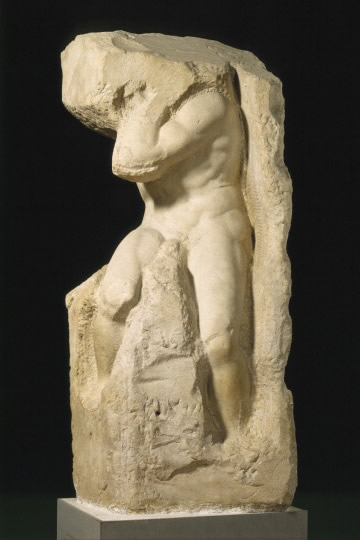
Our daughter’s 7th grade classmates back home are currently studying the Renaissance so it’s fortunate that we’ve been in Florence for a month. While she is missing the day-in and day-out assignments that her classmates are getting, she’s living and breathing the Florence of Michelangelo. de’Medici, Brunelleschi, Savanarola et al., as we walk around and explore the city each day. She’s also reading Irving Stone’s fictionalized biography of Michelangelo “The Agony and the Ecstasy.” I knew she was getting a lot out of the book when she got very excited about seeing Michelangelo’s “Prisoners” at Florence’s Accademia. She breathlessly explained to us how Michelangelo felt he did not create a sculpture; he simply allowed the figure to escape from the stone.

Homeschooling in general is not that difficult; it’s a matter of knowing what the kids should be learning and focusing them on it. As for knowing what to study, most states post their grade-level education standards on their state web sites. For our state, California, I cut and pasted those standards into a long Excel spreadsheet. My wife and I looked through it and decided that we needed to follow the guidelines with respect to Math, Science and History but we would do our own thing for everything else. For Math it was easy; her middle school teacher and principal allowed her to follow with the class and access both the on-line textbook and homework assignments. For History and science it was a little more difficult. This is where I harnessed the power of the World Wide Web to find the materials we needed. First I typed in “7th grade history textbook California” and found many textbook web sites (Holt Rinehart Winston, Prentice Hall, Glencoe, etc.) but all of them were password protected. Then I added two words to my search string that made a big difference: “username” and “password” and voila! I found several teachers’ sites that gave out the username and password for forgetful students. From there it was just a matter of getting into the textbook and making an off-line copy. With digital copies of history and science textbooks for our kids, we were set for their homework in those areas, even if we ever found ourselves without an Internet connection.

While poring over textbooks has its place, it pales in comparison to experiencing a place first hand…and nothing complements that experience like reading books and watching movies set there. My son has a pretty good feel for the end of the Ottoman Empire in present-day Turkey after having seen Peter Weirs’ “Gallipoli” and having read de Bernieres’ “Birds Without Wings.” Both kids can now breeze through biographies on Julius and Augustus Caesar (Freeman and Everitt, respectively) after having seen every episode of HBO’s “Rome” series. (see earlier entry on this here)

We walked by a statue last week and my daughter said, “That’s Michelangelo! See his broken nose? He thought of himself as kind of ugly…that’s why he liked to make plain-looking people beautiful.” Yes, our daughter is getting behind on her homework back home. Or is she?

Monday

Florentine Perfection

The quandary over where to spend your time in Italy is a good problem to have. We had allocated seven weeks but we had come up with a preliminary list of locations and sights that would take us several months to see. Whenever we feel overburdened by the sheer amount of things to do and see, we follow our traveler’s instincts and cut back on the itinerary and try to experience more by doing less. Fortunately, my wife has a knack for finding perfect short-term vacation apartments – years of finding great Lake Tahoe condos for family ski weekends have honed her skills. More recently her resume includes us a week in a spacious Athens apartment and three days in a perfectly-located Venice apartment, so when she told me that she’d found something interesting in Florence, she had my attention.

This is how we found our month-long Florence apartment rental located in the city center for a mere $59 dollars a night. While the price and the location sounded perfect, the apartment description sounded ideal, as well: Kitchen with dishwasher, washing machine, TV/DVD and wireless Internet connection. All these things have value; the time and expense needed for a family of four to eat three meals in restaurants, wash clothes in a Laundromat, go to a movie and visit an Internet café add up quickly.

Even though we booked late, we got the apartment and were thrilled upon arriving. The flat was in a converted monastery and was very large, light and airy, and had a view of the Brunelleschi’s Duomo from our west-facing windows. We now looked forward to a month in Florence in a perfect place. While I went around the corner to shop at the supermercato, our son enthusiastically went to work making the furniture arrangements more family friendly. He moved a futon near the window, centered the TV/DVD in front of the couch, set up the small table as an office/homework space for the laptops and organized his private nook. Our son loves things to be organized but more importantly, both he and our daughter love a little routine – no doubt a reaction to our moving about so much. His “nesting” behavior was a statement that he was going to have his “place” and no one was going to tell him to catch a train or a bus anywhere for the next month.

Everyone had their space and we were ready for our month-long assault on the capital of the Italian Renaissance. We had goals for our time in Florence. The kids would take Italian language class, we would visit most of the museums, sights and churches in the city and we would try to decide which of the many gelaterias in the city were best. We felt good about our decision to cut back on the Italian itinerary and focus our time in one place. When we thought things could not get any better, we learned the next day that it was European Culture Week and all the museums in Florence would be free for the next week. Now we had to decide how we’d see it all. That’s another good problem to have.

Friday

The Leaning Tower Of Pisa: Stairmaster Prototype

One of things that we were unprepared for when visiting Pisa’s Leaning Tower, was the sensation of climbing spiral stairs in a tower that leans a few degrees to one side. The best way to describe it is to compare it to a Stairmaster machine, and I’m wondering if the Stairmaster engineers climbed the Torre Pendente prior to the first launch of their wildly successful exercise machine in order to make sure that they got it right.

We visited the tower on an overcast Tuesday and timed our visit perfectly to coincide with a rainstorm as we parked our car near the Piazza Dei Miracoli. In addition to the climb, we were unprepared for the tower’s beauty. The arches and columns were elegant and the marble walls and interior were polished to white perfection. The town had thousands of towers in the late 12th century but it lacked a bell tower. A wealthy Pisan patroness bequeathed funds for the tower but it took over a hundred years to ultimately complete. Even during construction the tower started to lean due the local water table being so close to the surface. Once finished, the tower blended in perfectly with the Romanesque Duomo and Bapistry in the Piazza Dei Miracoli. For all its medieval splendor, it was the comparison to the modern Stairmaster that stuck with me.

It’s not that climbing the steps is a great workout. There are only 294 of them and visitors are motivated to make the trip quickly before the structure completes what it has already started. (Only 40 visitors are allowed at one time to make sure the Leaning Tower doesn’t have to come up with a new name) The similarity to a Stairmaster is due to the sensation of climbing alternating gradients. In my limited experience on a Stairmaster, I’ve marveled at how it can simulate climbing hills of various gradients, mixing in “steep” and “flat” climbs to give the user a balanced workout and recreate the sensation of a brisk walk in the hills.

We entered the tower and started our clockwise ascent up the marble stairs that spiral their way to the top. Imagining the footprint of the tower on the face of an analog clock, the entrance is at 6 O’clock and the tower leans to 3 O’clock. By the time we climbed to 12 O’clock, the sensation hit us: the gradient eased and it felt like we were walking “downhill” even though we were still climbing. Continuing our climb up, we wrapped around back to 6 O’clock and experienced the opposite: the climb became steeper and we felt like we were working harder to make it up the tower. At 3 O’clock and 9 O’clock we would lean either towards the inside or outside wall of the staircase and I wondered if the smooth, rounded depressions in the marble steps were made worse from centuries of climbers leaning to and from and side to side.(see photo) The experience was like a “fun house” in a circus or carnival, where you walk through a dark makeshift structure designed to challenge your senses. Along with image-distorting mirrors that make you look either fat or thin, there is often the room with a floor that tilts slightly, making you feel off-balance.

After 294 steps, we were slightly winded and made it to the top and admired the views on a rainy Tuscan day. We had about 15 minutes on the top and then it was time to go back down. The next group of 40 visitors were about to take their turn on the Pisa Stairmaster.

Sunday

Venice Walking Tour: Leave The Map Home

As a person who prides himself on finding anything with a halfway decent map, Venice had me confounded. I’d check our location, take note of what was coming up (Three turns: first left at the next corner, second left at calle vendra-something, then a right to reach the square) and almost every time I’d wind up nowhere near where we wanted to go. It got to the point where after each corner, I’d stop to consult the map to see if we were on the right track. Prior to coming to Venice, my wife and I talked about doing the six-hour walking tour in our guidebook. With gondolas expensive, cars nonexistent and plenty of things to see, this seemed like a great idea, but now we weren’t so sure.

Venice is built on 117 small islands connected by 400 bridges over 150 canals. There are no automobiles and the only modes of transport are either walking or taking a gondola, vaporetto or traghetti on the canals. Aside from the Grand Canal, there is no principal thoroughfare and the pedestrian walkways turn at almost every corner. Streets are not straight, vias veer at all angles and squares (campos) are not square. With calles going off in all directions and fondamentas ending abruptly, it is extremely easy to get lost.

I guess the question is: does it matter if you get lost? With one of the most beautiful cities in the world in front of you, would you rather spend your time looking up at the gothic architecture or looking down at a map? Everything you see in Venice is old, unique, beautiful and worthy of inclusion in a walking tour, anyway. We didn’t mind getting lost because around every corner was something interesting to see. A wrong turn meant seeing a beautiful Gothic church, a gondolier poling down a canal or a tower leaning slightly to one side.

Venice’s physical environment is indeed unique but so is its history. Interestingly for us, it had nothing in common with the places we’d been to on our trip. In South America it’s a familiar theme: the Spanish, and to a lesser extent the Portuguese, colonize the continent about 450 years ago and in the 1820’s most of them get their independence from their European masters. The details are different but the story is the same. In the Eastern Mediterranean, once Egypt’s great civilization is on the wane, it’s all about the Greeks, whether they’re Mycenaeans, Spartans, Athenians, Macedonians or Byzantines. The Romans ruled for quite a while but they begrudgingly admired the Greeks (their gods were renamed Greek gods) and the Renaissance was a rediscovery of Greek ideals. Traveling through the eastern Mediterranean, most of the places we visited told a story of Greek, Roman, and to a lesser extent, Ottoman occupations. Again the details are different but the story is the same.

After two days of walking around and getting lost, my wife and I had pretty much decided that we weren’t going to do the walking tour. We were having too much fun discovering things along the back streets and side canals and by now we were starting to learn how to get around without a map. From that point on the map stayed in our apartment.


This post is part of Denise Pulls' Blogsherpa Blog Carnival Memorable City Experiences at Travel With DenDen.