Showing posts with label Homeschooling. Show all posts

Monday

Travel And Kids: No School For A Year

Pondering the Temple of Artemis in Turkey
Both our kids have missed an entire school year and our daughter studied under the auspices of the district’s independent study program the previous spring. The three most common questions that we’ve heard from friends and acquaintances were “Will they let you take the kids out of school for a year?”, “Won’t they get behind in school?” and “How do you know what to teach?” As we started to tell our family and friends about our plans, these three questions cropped up more than any others. (One of the more amusing questions we heard was from an administrator at the kids’ school: “How will you carry all those textbooks?” Answer: “We won’t.”)

The first question is an interesting one: "Will they let you take the kids out of school for a year?" All school districts are different, but we had surprisingly little interest or concern from our kids’ middle school. No one from the school, the school district or the State of California has stepped forward and said that we couldn’t do what we planned to do. The school was much more concerned about the minutiae of our daughter’s independent study for the final trimester than for missing the entire next year. The independent Study program allows “distance learning” under a teacher’s remote supervision for a period of up to 60 days. Our daughter’s teachers set up an independent study curriculum with scanned pages from her math, science and language arts textbooks, as well as research reports on both the Andean Condor and the Andean ecosystem as well as a research paper on The Beatles.

The second question, “Won’t they get behind in school?” is a fear that many parents share. It helps that both our kids are very good students so there is no “catching up” or learning issues to deal with. Both my wife and I both think that there is not a lot of learning going on in middle school. It is a time when kids are going through drastic physical and emotional changes and middle schools’ resources are overtaxed just to keep kids from falling off the deep end. Additionally, the time required to homeschool two kids ought to be much less than the time required to teach 20 kids in a school classroom. Finally, when we did a 6-month sabbatical through Central America and Spain in 2005, both kids missed the final trimester of that school year and did not miss a beat upon returning in the Fall.

The third question, “How do you know what to teach?” is easy in theory but hard in practice. The California education standards for each grade are listed in detail at the State of California’s web site. The blueprint is right there on the World Wide Web and all you have to do is print it out. In practice, the act of coming up with problems, exercises and projects that will teach the standards has given us a deeper respect for the teaching profession. Last week both our kids finished 500 word persuasive essays on the question: The Monroe Doctrine: Good or Bad for Latin America?” This week they are writing a 750 word dual biography on the twin liberators of South America: Simon Bolivar and Jose de San Martin.

Most of this blog entry has been about “keeping up”, but there are many things that they are getting from travel that their classmates aren’t. They are already intermediate-level Spanish speakers and they are acutely aware that most of the world is nothing like the privileged place they call home. They have learned that many simple things that they have taken for granted are luxuries in the developing world. They are much more open to new and different people, foods, customs, experiences and points of view. Perhaps most importantly, they will have a broader view of their responsibilities as global citizens when it comes time to choose their careers. It may be a cliché, but it also happens to be true: “Travel is Broadening”.

Macedonia: There's Something In The Water

A big part of our kids’ education while traveling the Mediterranean is centered on history: particularly Egyptian, Greek and Roman history with some Ottoman Empire thrown in as well. Throughout their (and our) travel-based history lesson, it has occurred to us that the Balkan area of Macedonia has disproportionately contributed more world leaders than just about any other region in the world, save for the long line of Roman emperors from the Italian peninsula.

Present day Macedonia is a landlocked sovereign country bordered by Kosovo, Serbia, Bulgaria, Greece and Albania and is one of the successor states of the former Yugoslavia. Ancient Macedonians lived in the alluvial plain around the rivers Haliacmon and lower Azius in the northeastern part of the Greek peninsula. The Battle of Chaeronea, where the Macedonians defeated the Greeks in 338 BC, marked an end of Greek history and the beginning of the Macedonian Era. The kingdom of Macedon was established by the 8th or 7th century BC and their first ruler of note was Philip II (“Philip of Macedon”) who ruled from 359-336 BC.

Under Philip of Macedon the Macedonians are credited with numerous military innovations, chiefly among them the phalanx (a rectangular mass military formation) and the sarisssa (an extremely long spear or pike). He united Macedonia, Illyria, Thrace and Greece by bringing the various city-states into his empire through military victory, persuasion or by bribes. Probably his greatest legacy was his son Alexander, also known as Alexander the Great. When Philip II was assassinated by one of his bodyguards, Alexander took over.

Alexander the Great (356-323 BC) led the Macedonian armies into Asia and conquered the Persian Empire, enabling Macedonia to become the world’s largest Empire, stretching from Europe, to North Africa, to Asia and India. Alexander was tutored by Aristotle (who in another interesting line of succession, was a pupil of Plato, who was a pupil of Socrates) and was influenced by the classical Greek thinking of that era. Alexander’s death led to a Macedonian civil war, as his generals fought over who would succeed him. Ultimately the generals carved up the empire with Antigonus I taking Macedonia and Greece, Seleucus I taking Asia and Ptolemy I taking Egypt. While Antigonus and Selecus formed dynasties on a smaller scale in their respective territories, Ptolemy’s dynasty in Egypt lasted for 275 years (from 305 to 30 BC), taking over what was the grandest and longest-lived empire that man had seen to that point. Over a dozen successions into the Ptolemaic dynasty, Cleopatra VII came to the throne.

Cleopatra was the last of the Ptolemys to rule in Egypt and after her death, Egypt became a Roman province. Most Ptolemaic rulers spoke Greek and refused to learn Egyptian, which is why Greek as well as Egyptian languages were used on official court documents (as well as the Rosetta Stone). In contrast, Cleopatra learned Egyptian and represented herself as the reincarnation of an Egyptian Goddess (Isis). While there is some evidence to the contrary, Cleopatra is typically cast as a great beauty and her conquests of the world's most powerful men (eg., Julius Caesar, Mark Antony) are taken to be proof of her allure. French philosopher Blaise Pascal argued that Cleopatra's classically beautiful profile changed world history: "Cleopatra's nose, had it been shorter, the whole face of the world would have been changed." While she certainly charmed great Roman leaders, other Romans were not so smitten with her, highlighting her Macedonian goatherd family origins in many off-color jokes.

In the 20th century, Kemal Ataturk, the father of modern Turkey, was born in Salonika (Thessalonika) to an Albanian father and a strong-willed Macedonian mother. It’s pretty amazing that this Balkan pastureland between the high peaks has produced so many great leaders. For a bunch of goatherds, the Macedonians have done pretty well for themselves.

Homeschooling: The Mediterranean's Fluid Borders

One of things that our kids (and their parents) are learning from our travels in the Mediterranean is how fluid borders are. Roman outposts in Morocco, Greek colonies in Italy, Macedonia dynasties in Egypt, Genoese watchtowers in Corsica and Venetian cities in Greece are but a few examples. It can be easy for non-historians to fall into the trap of thinking that a present-day border contains the history of that country. Our kids have learned that this is not true; a great example of this is Turkey.

When planning the Mediterranean portion of this trip, the present–day countries of Egypt, Greece and Italy were high on our collective list, so for the kids’ homeschooling we decided to focus on the respective histories of ancient Egypt, Greece and Rome, figuring that those cultures comprised the underpinnings of Western Civilization. With those three civilizations as our focus, the present-day country of Turkey was not on the radar screen, despite the fact that my wife and I had been there before and were both surprised and pleased at how diverse and interesting it was. It was only later, a few months into this trip, that we decided to add Turkey because of its proximity to both Egypt and Greece. Now that we’ve completed the Turkey portion of our trip, we’re thankful because not only have we learned much about Turkey, we’ve learned a lot about the Greeks and Romans as a result.

Present-day Turkey’s history dates back to the aftermath of the WWI and the fall of the Ottoman Empire, so there is only 90-odd year’s worth of modern history to consider. While that history is interesting, especially Kemal Attaturk’s founding of the secular Turkish Republic, it is the couple thousand years prior to that which is instructive. The Hittites, Greeks, Persians, Armenians, Romans, Goths, Byzantines, Kurds, Ottomans and Turks have lived in or occupied the Turkish peninsula known as Asia Minor. The Romans called this peninsula “Asia” and after the true size of continental Asia was known, it became known as Asia Minor (“Little Asia”).

We learned more about the Romans than the Turks when we visited Efes (Roman name: Ephesus), Bergama (Roman name: Pergamum) and Bodrum (Roman name: Halicarnassus) on the Aegean coast of Turkey. In Istanbul we learned more about the Greek-Byzantine era of the city -- previously known as Byzantium, then Constantinople -- than we did about modern Turkey. In essence, our trip to Turkey was just as much a glimpse into ancient Greece and Rome as it was a view of Turkey. We feel like our kids have an appreciation of this, of how borders can change over time. So do their parents. Who says homeschooling is only for kids?

Saturday

Arrivederci Roma: Life In The Love Lane

Heading south from Rome, we decided to take the scenic route down to the Amalfi Coast; scenic in this case being our euphemism for “free.” We avoided the Autostrada toll freeway, swung around the freeway that circles around Rome, turned south on SS148 and settled in, all of us humming Dean Martin’s “Arrivederci Roma.” It was about 9:30 in the morning and it would take 5-6 hours to make it to our destination of Praiano on the Amalfi Coast. We called it the scenic route and after 15 minutes we realized that our nickname for this road was appropriate, but in a very different way.

Our first glimpse of the “scenery” came near the town of Pomezia. On the side of the highway we whizzed by a young woman with heavy makeup, hot pants and see-through halter top awkwardly walking alone in extremely high stiletto heels. In the flash of a second we had passed her and I looked in the rear-view mirror but a large truck blocked my view. Did I really see that? I told my wife that I thought that I’d just seen a prostitute on the side of the freeway and she laughed. Five minutes later another scantily-clad woman walked near a “semi” truck that had pulled over to the side of the road. “Look, another one!” I said. Ten minutes later we saw two women sitting on the guard rail, dressed for work.

At this point the kids, who had been reading in the back seat, became interested. “What are they doing?” asked my daughter. “Well, they’re prostitutes looking for customers on the freeway,” I said delicately. This led to a short discussion about prostitution and how it might work here on an Italian freeway. We tried to honestly answer their questions as quickly as possible in order to end our impromptu homeschooling lesson and get their minds focused on something else. My wife and I often tell ourselves that our kids are getting a great education by traveling with us, perhaps in part to reassure ourselves that they’re not missing out on too much back home. This was definitely something that they would not be getting in the classroom.

Fifteen minutes later we saw another working girl walking through the gravel on the side of the road in her high heels. Every few miles there were “turn out” lanes that allowed cars and trucks to make stops for a variety of reasons. “Love lanes,” said my wife, coining the term as we passed another truck pulled over to the side of the road. We didn’t see a girl around the truck, but on this road any truck pulled off to the side was immediately suspect. As we drove on for the next hour, every time we saw a truck parked on the side of the road, we looked for hookers. Guilty until proven innocent. That’s life in the Love Lane.

(Note: we did not see this traffic sign but found it on a Google image search)

Thursday

Homeschooling From Florence

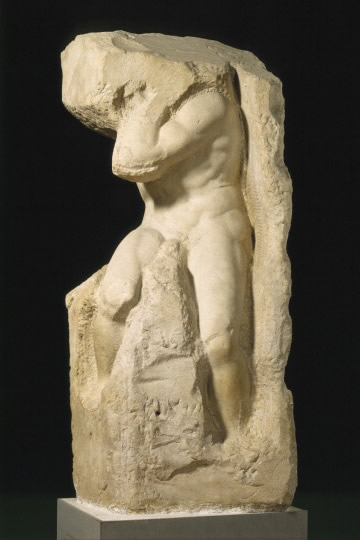
Our daughter’s 7th grade classmates back home are currently studying the Renaissance so it’s fortunate that we’ve been in Florence for a month. While she is missing the day-in and day-out assignments that her classmates are getting, she’s living and breathing the Florence of Michelangelo. de’Medici, Brunelleschi, Savanarola et al., as we walk around and explore the city each day. She’s also reading Irving Stone’s fictionalized biography of Michelangelo “The Agony and the Ecstasy.” I knew she was getting a lot out of the book when she got very excited about seeing Michelangelo’s “Prisoners” at Florence’s Accademia. She breathlessly explained to us how Michelangelo felt he did not create a sculpture; he simply allowed the figure to escape from the stone.

Homeschooling in general is not that difficult; it’s a matter of knowing what the kids should be learning and focusing them on it. As for knowing what to study, most states post their grade-level education standards on their state web sites. For our state, California, I cut and pasted those standards into a long Excel spreadsheet. My wife and I looked through it and decided that we needed to follow the guidelines with respect to Math, Science and History but we would do our own thing for everything else. For Math it was easy; her middle school teacher and principal allowed her to follow with the class and access both the on-line textbook and homework assignments. For History and science it was a little more difficult. This is where I harnessed the power of the World Wide Web to find the materials we needed. First I typed in “7th grade history textbook California” and found many textbook web sites (Holt Rinehart Winston, Prentice Hall, Glencoe, etc.) but all of them were password protected. Then I added two words to my search string that made a big difference: “username” and “password” and voila! I found several teachers’ sites that gave out the username and password for forgetful students. From there it was just a matter of getting into the textbook and making an off-line copy. With digital copies of history and science textbooks for our kids, we were set for their homework in those areas, even if we ever found ourselves without an Internet connection.

While poring over textbooks has its place, it pales in comparison to experiencing a place first hand…and nothing complements that experience like reading books and watching movies set there. My son has a pretty good feel for the end of the Ottoman Empire in present-day Turkey after having seen Peter Weirs’ “Gallipoli” and having read de Bernieres’ “Birds Without Wings.” Both kids can now breeze through biographies on Julius and Augustus Caesar (Freeman and Everitt, respectively) after having seen every episode of HBO’s “Rome” series. (see earlier entry on this here)

We walked by a statue last week and my daughter said, “That’s Michelangelo! See his broken nose? He thought of himself as kind of ugly…that’s why he liked to make plain-looking people beautiful.” Yes, our daughter is getting behind on her homework back home. Or is she?

Monday

Homeschooling: World History In A Spreadsheet

While we’re travelling, our kids can’t help but learn about history, but the sheer amount of events and their corresponding dates can be overwhelming. Does it matter that the battle of Gallipoli was in 1915? Who cares if Alexander the Great died in 322 BCE? Will it really matter if we forget that Ramses II completed the Abu Simbel temple in Southern Egypt in 1257 BCE? With all the information that we come across, it helps to be choosy; stick with the big events…the ones that shaped their time or future eras. As for how we remember these key dates and how they relate to one another, Dad has the answer: the spreadsheet.

As a retail business consultant I often create and use Excel spreadsheets that help me solve problems for my clients, so naturally when I thought about this problem, I instantly visualized the solution: a timeline in a spreadsheet. (No, I’m not kidding) Running across the top of the spreadsheet are columns for DATE, CENTURY, EVENT, PRESENT DAY COUNTRY, etc. and the rows run downward for thousands of cells. When we first started it, we stuck in family birthdays for the kids, us and their grandparents. After that, we just let our travels teach us.

Running in reverse-chronological order, here’s a sampling of some of the dates we’ve entered into the spreadsheet based on our travels:
1869 - Suez Canal Completed (Egypt)
1835 - Charles Darwin visits the Galapagos (Ecuador)
1799 - Rosetta Stone found (Egypt)
1783 - Simon Bolívar born (Venezuela)
1532 - Francisco Pizarro defeats Atahualpa at Cajamarca (Perú)
570 - Mohammed the Prophet is born in Medina (Saudi Arabia)
27 BCE - Augustus (Octavian) becomes the first Emperor of Rome (Italy)
31 BCE - Battle of Actium (Greece)

Most of the events are inspired by our travels but often the kids’ homework or a book they’ve read will trigger an entry. The Suez Canal, Galapagos, Rosetta Stone entries listed above were from our travels. My daughter’s 7th grade history book has a chapter on The Rise of Islam so we put in Mohammed’s year of birth after she finished the chapter. The Francisco Pizarro entry was put in after my son read Kim McQuarie’s The Last Days of the Incas. The Emperor Augustus and Battle of Actium dates are from all of us watching two seasons of HBO’s Rome series, which the kids have loved (see blog entry on this here) and has led to many dates in the timeline.

One thing I’ve learned from the experience is how hard it is to make a timeline; you’d think it was just a simple matter of putting one date after another. Multiple events in one year (i.e., 1492: Columbus discovers America and the Christians kick the Moors out of Spain) can be difficult to show and representing an era or dynasty (i.e., Egypt’s Middle Kingdom) is hard when the timeline is geared towards individual events. Because of the linear nature of the timeline, showing events and history by region or country is tough and grouping events within disciplines (science, arts, politics, etc.) is very tricky. (And when did they replace BC with BCE, anyway?) With all these challenges we’re not losing sight of what’s important – showing the kids how their travels relate to world history.

Sunday

Homeschooling: Reading While On The Road

In addition to all the homework material that our kids have while on the road, we ask that they read a lot. I keep a record of what all of us are reading in an Excel spreadsheet (see photo) which calculates our progress; number of books, pages, words read, etc. Yeah, this is a bit nerdy but the competition has given the kids incentive to read more. In addition to the classics that they should be reading like 1984, Huck Finn, The Great Gatsby, Treasure Island, The Old Man and the Sea, etc., we are sending the books that we are reading their way – books that are set in the countries we are visiting.

There is nothing quite like reading a book while you are in the country that it’s set in. In northern Peru, Kim MacQuarie's The Last Days of The Incas brought Cajamarca to life when pretty much everything from the time of the conquest had disappeared. In southwestern Turkey, whenever we saw Lycian tombs or tortoises plodding across our path or spike-collared shephard dogs, I thought of Louis de Bernières’ Birds Without Wings. In Cairo, we sat in the café in Midaq Alley, absorbing the atmosphere made real in the eponymous book by Naguib Mahfouz.

The books we’ve read have ignited some interesting discussions within our family. In Masha Hamilton’s The Camel Bookmobile, a New York woman volunteers and brings books to remote Kenyan villages on the backs of camels in an effort to improve their literacy. Many of those villages were similar to ones we’d seen while driving across Kenya. What the protagonist learns along the way is that many of the villagers have some very good reasons to not want to learn to read and this intrigued our kids. “Why wouldn’t they want to learn to read?” asked our daughter, which started a discussion on western values. After we all finished another of Mahfouz’ novels, The Thief and the Dogs, our kids tried to understand the motivation of Said, the thief. Was he good? Are bad deeds good if they are done for the right political reasons? My son and I said “no” and my wife and daughter said “yes.” From a parent’s perspective, it’s a win just to be having this conversation with your kids.

We are now in Turkey and both kids are ready to start Birds Without Wings, a sweeping historical novel that follows the lives of the people from a typical Turkish village before, during and after WWI. From that book, we’re sure that the kids will understand why a picture of that Ataturk guy with the moustache still adorns the back wall of almost every business establishment in Turkey. Soon we’ll be on to Greece where we’ll all start on the book we found today at a paperback book exchange. We acquired Captain’s Corelli’s Mandolin, de Bernières WWII book about the Italian occupation of a Greek Island, in exchange for Midaq Alley, which my daughter just finished reading. Time to update my Excel spreadsheet.

Saturday

Homeschooling: Travels With Burger

Both our kids are homeschooling while we’re traveling and it is comforting to know that mathematics is the least of our worries. This is in large part due to Burger. Our kids love Burger. Burger is Professor Edward B. Burger, a mathematics professor and online video math teacher extraordinaire. He’s funny, he’s organized, he’s full of energy and he makes math fun. Recently, while my son was doing his geometry homework, he yelled out, “Check out Burger!” We all lined up behind his laptop to watch Burger declare his preference for, of all things, a math theorem: “Pythagorean Theorem, I've got to tell you, this is my favorite theorem. This is it. If you were wondering: Gee, Professor Burger what is your favorite theorem? You know what. Wonder no more.”

Burger is a professor in the Department of Mathematics and Statistics at Williams College and is a pioneer in the multimedia Internet lectures that complement online written material to form electronic textbooks. His lesson tutorial videos earned publisher Holt, Rinehart and Winston a 2007 Award of Excellence from Technology & Learning, an academic publication. Our kids are studying geometry and pre-algebra, respectively, via an online Holt California Mathematics Course and they are loving it.

I don’t want to say he’s a nerd or anything, but Burger’s research interests include algebraic number theory, Diophantine analysis, p-adic analysis, and continued fractions, to name a few. One of his scholarly articles is named "Badly Approximable Systems and Inhomogeneous Approximation Over Number Fields.” Okay, okay…he’s a nerd…but he’s a cool nerd. I mean he’s got a Facebook page. It’s full of gushing teens and pre-teens thanking Burger for his teaching style that makes math fun and interesting. On Burger’s Facebook “wall” one of his fans says “I watched your vids and they are clear and hilarious! (Our) school LOVES YOU. We are always like "PUT ON BURGER!"

Burger is enthusiastic, organized and full of energy. He wears glasses and has large eyes that occasionally have a crazed look as he gets excited about whatever the topic is. He has jet-black hair, prefers long-sleeve shirts in dark colors with the sleeves rolled to the elbow. His lessons are interactive and he’s constantly asking questions of his audience: “Tell me what you think,” or “Isn’t that right?” He recently started a tutorial video with a math problem couched in football terms. Just before he launched into the problem, a football was tossed to him from offstage. He aids his lessons with graphics and animations. My daughter was doing her Pre-Algebra homework a few weeks ago and said, “Look at Burger!” She re-wound the video for us, which started with Burger declaring, “I like gold.” Then, an animated gold crown appeared on his head, followed by a gold necklace, a gold bar and a gold staff. He keeps the kids interested.

Burger has been a big part of our travels and he feels like part of the family now. He does most of the tutorial videos for the kids’ homework, but occasionally someone else stands in for him and the kids are disappointed. A few times, an older woman professor will appear in the video and our kids will groan, “Where’s Burger?”; she’s very good but it’s just not the same without Burger.

Thursday

Homeschooling Essentials: HBO's "Rome"

Okay, we’ll admit that having our 14 and 12 year old kids watch HBO’s graphic and award-winning “Rome” series as a part of their homeschooling curriculum is a bit unorthodox. Along with online textbooks, workbooks, writing journals, web tutorials and classic novels, we are making them sit through one of the most violent and sexually-explicit series in television history. It’s filled with blood, four-letter words, quite a lot of nudity and several fornication scenes. It’s not that we are extremely permissive parents – we’re not – it’s just that we have found no better way to have the myriad of characters and events of Ancient Rome come alive for our kids’ education.

HBO’s “Rome” series is set during Ancient Rome’s transition from Republic to Empire, starting around the time of Caesar’s invasion of Gaul and ending around the time of Mark Antony’s death and the rise of the first Emperor Augustus. The series started in 2005 and lasted just two seasons. It was a critical and ratings success but ended due to the price tag of the lavish costumes, extensive sets and on-site locations in the Italian capital. The first season alone cost over $100 million.

In order to shield our kids from the gratuitous sex and violence, we simply mute the sound and ask them to cover their eyes. It helps that both my wife and I have already seen both seasons and can therefore anticipate the more explicit scenes. And there are plenty of them. The Los Angeles Times describes a “vivid portrayal of a dirty, cacophonous, amoral metropolis steeped in the tumult of the time. There are graphic depictions of both the city's violence and sex within the first few minutes of the premiere, which features blood-splattered soldiers thrusting fatal blows into their Gallic enemies and the full-frontal nudity of a woman emerging from a post-coitus bath.”

A byproduct of our unique censorship method is a story that gets a bit choppy. We watched the first episode from our Cairo hotel room and my wife and I were prepared to pause the DVD at the first graphic sex scene between Atia (Caesar’s niece) and one of her lovers. As soon as I saw the edge of the bed in the frame, I paused the remote, said “Cover your eyes” and muted the volume. When the inappropriate scene was over, I paused again, un-muted the volume, said “Ok, open them,” then hit the play button. With so much inappropriate material, watching an hour-long episode of “Rome” can take almost two hours, with a lot of wear and tear on the pause button. Hitting the pause button is something that happens a lot when our family watches DVD’s. Oftentimes, my son or daughter will say, “Pause it! Why is Pompey leaving Rome?” which will lead to a short discussion of the politics of his decision. In terms of learning about Rome while avoiding the sex and violence, this isn’t the most elegant educational solution, but we’ve found none better.

About a year ago, knowing that we’d be touring the Mediterranean, I began reading Gibbon’s 3-volume “The Decline and Fall of the Roman Empire." I am usually pretty good at slogging my way through long history books and I even printed out both an event and emperor timeline to begin my assault on the empire. I got about 200 pages into the first volume and had to give up; Gibbon was just too dry and the work covered too many personalities and events that I was unfamiliar with. About 4 months ago my wife and I started watching the “Rome” series and were hooked. After watching Augustus, Cleopatra, Julius Caesar, Cicero, Mark Antony, Pompey, Cato and others for 24 episodes, we felt close to the characters and that we had a good understanding of this very important period of history. We hope for the same for our kids…minus the sex and violence.


Read more about kids and travel at the July 2010 Lonely Planet Blogsherpa Carnival at Glennia Campbell's The Silent I blog. Here is the link to the carnival post "Kids Around The World".